
Rogue Blight Launch Review
2D souls combat on a Slay the Spire map — what launch week actually delivers.
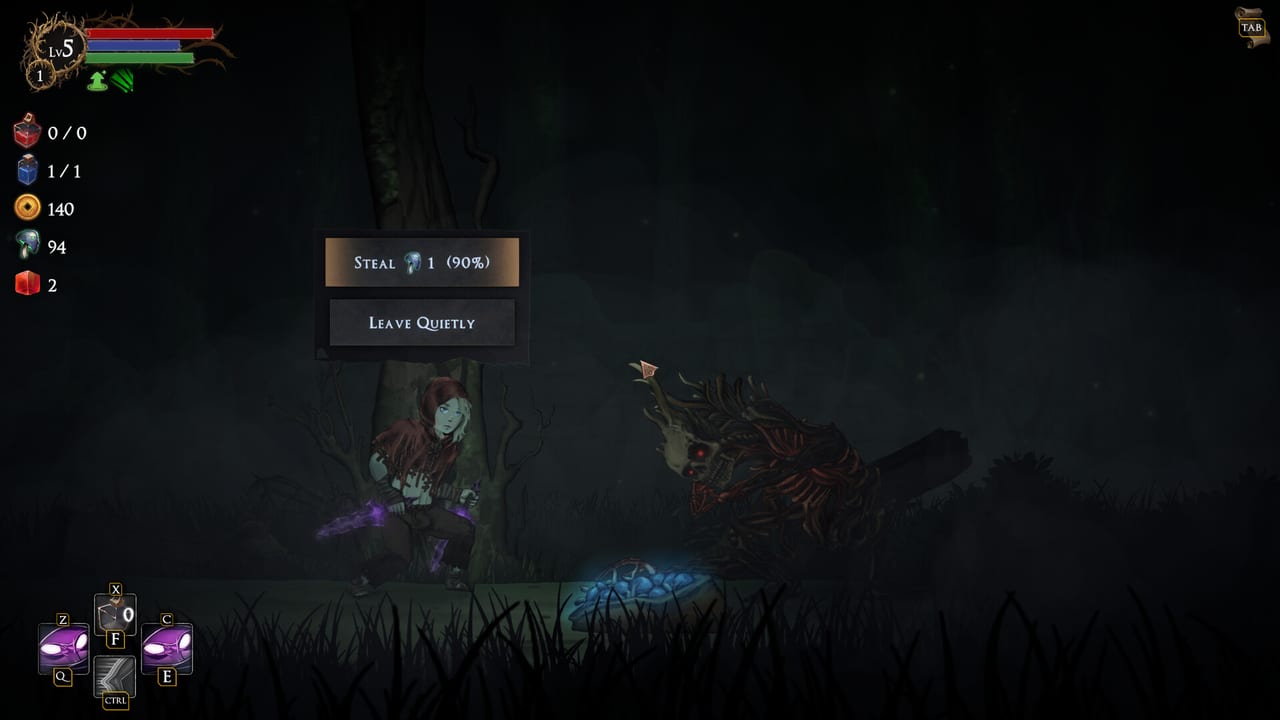
Rogue Blight launched on Steam on 3 September 2026 for Windows, macOS, and Linux. CodeRadGames is selling it at a $12.99 introductory price through 17 September 2026. Launch-week Steam copy sat at Very Positive on a still-small sample (on the order of a few dozen reviews, not a blockbuster pile). This is an honest read of that game: a 2D souls-like wrapped in a rogue-lite map, built for years in public demo form, now asked to be a full product.
It is a single-player action RPG with full controller support, Steam Cloud, achievements, and leaderboards. If you want a 40-hour linear castle to memorize, this is the wrong purchase. If you want one more duel and one more map after dinner, it is aimed at you.
New players should still start with getting started rather than this opinion. Patch-level caveats belong on the launch notes.
What it is, without the pitch deck
Konrad Jablonski (CodeRad) has been blunt about the mix. Combat and tone come from Dark Souls — he has called Dark Souls 3 his favorite game. The map is Slay the Spire (with Inscryption in the same inspiration column). The between-run upgrade carrot is Dead Cells. The silhouette, the grim 2D bodies, the way gear changes how you look: that is the Salt and Sanctuary neighborhood, and Steam even bundled Rogue Blight with Salt and Sanctuary and Salt and Sacrifice at launch.
You traverse three generated chapters — Waywood Forest, Fireworn City, Blight Castle — pick nodes (enemy, unknown, chest, shop, statue, bonfire, blacksmith, boss), and fight mostly one-on-one. Konrad has said that focus is the differentiator: not a screen of trash mobs, but single enemies with long move lists so a “basic” duel can feel like a mini-boss. About 17 story bosses sit on that ladder, with named walls including Gorilla, Wendigo, Statue Dweller, Illdrake Knight, Royal Rotter, Blight Lady, and The Blight.
Story length is about three to four hours for a competent clear. The meal is infinite New Game+ and whatever Challenge Maps you find. That is not a cop-out if you like the duel. It is a cop-out if you bought it expecting a Metroidvania you fully chart once.
Combat: the reason to pay
The combat is the feature. Stamina gates swings and rolls. Every weapon is one-handed. You wear two at once: swords, daggers, wands, or a left-hand-only shield, more than 50 unique weapons with their own skills. Same-type dual-wield (two swords, two daggers, two wands) is a stance the demo’s Captain explains: both weapons fire, but attack damage and status apply rate drop 40%. Mixed hands skip that stance and play like a souls kit with two skill buttons.
Status is not a side mode. Steam lists Bleed, Poison, Burn, Freeze, Shock, Choke, Shatter, Life Splash, Darkness, and Light Struck, and they apply to bosses. Wands, per Konrad, hit lighter on normals, reach farther, and dump mana on skills so a mage still has to dodge in a small arena. That is a fair design sentence. Whether every wand is balanced on day one is a weapons and builds question, not a review score.
Demo critics sometimes bounced off attack cooldowns and the feeling that you cannot cancel everything into a roll. That complaint is real and subjective. If you need seamless Bloodborne-style chain-dodging, test the combat feel in the still-available demo (Steam app 2336830) before you spend $12.99. If you already like Salt and Sanctuary’s weight, the cooldown discipline will feel like the point.
Boss quality is the swing factor. Gorilla and Wendigo were public for years; Wendigo’s grab is a known specialty. The full roster exists because Konrad watched the demo, decided seven bosses were not enough, and pushed toward 17. Launch week is too early to crown the castle fights as all-timers. It is fair to say the design process — gimmick first, then animation — is the right one for this combat.
The map is a good servant, not the star
The Spire-style graph does its job. Chests hand blessings. Shops sell weapons, gear, and blessings. Statues bump health, mana, or stamina. Blacksmiths smelt junk. Bonfires heal, and upgrades can refill potions. Unknowns are the rogue-lite spice, including a Helrayzr NPC in ? areas as a reward for a real no-hit demo run. You will make routing mistakes. That is the genre.
Blessings in demo footage looked like honest rogue-lite relics: a one-shot revive, a “above 70% health, take less damage” buffer, aerial damage, shield cooldown, fireballs from the sky. Some are stronger than others. Konrad’s stated balance rule is that he does not nerf a broken build if it is hard to recreate. That is a player-friendly sentence. It is also how a launch week creates one annoying meta until a patch. Watch the launch notes.
Challenge Maps are a sharp idea: one attempt, fail, find another in the story. They will either feel like spicy side content or like a brick, depending on whether you understood the rule before you tapped the node.
Solo-dev polish versus launch-week caveats
This is a passion project funded by Konrad, built part-time around a software-engineering job, with contractors on art (Dane Celestia), audio (Adam Greenlee, whose soundtrack is a separate $2.99 DLC), and voices (Jason Quaid). Five-plus years is a long time. The demo being public for years is why the forest already feels tuned: map-path generation even got a patch because routes skewed right.
Launch-week caveats, stated plainly:
- Review sample is small. Very Positive on a few dozen takes can swing.
- Steam Deck compatibility showed as unknown on the store page scrape at launch, even though the demo advertised Deck support. Verify on your machine.
- Later chapters were not in the public demo. Forest polish does not automatically equal castle polish.
- Some players will hate skill cooldowns and mana-priced parries.
- This wiki will not invent a numerical metacritic. The honest score is “buy it if the demo duel clicks.”
What is already impressive: readable 2D bodies, gear that shows on the character, a map that explains itself, and a hub that makes Funguy feel like a reason to fail forward. What is not proven on day two: whether difficulty 8 still respects your time, whether every one of the 17 bosses is a gimmick worth learning, and whether weekly leaderboard challenges (scope) landed as a mode you will open on a Monday.
Who it is for
Buy it if you like Salt and Sanctuary, Dead Cells unlocks, or Dark Souls combat and you have been waiting for those to share a brain. Buy it if a 2D duel in a small arena is your idea of a good night. Buy it at $12.99 before 17 September 2026 if the demo already stole an evening.
Skip it if you need co-authored exploration, a huge linear map, or action games without a stamina bar. Skip it if you bounce off 2D side-scrollers on principle. Skip it if you want a narrative RPG with a novel’s worth of NPC quests — the plot is a blighted kingdom, a usurping Blight Lady, and a rogue who can die and come back. That is enough flavor. It is not Elden Ring’s footnote density.
The tell for this game is whether you enjoy losing a run to one grab and immediately drawing a new map. If that sounds like fun, the intro price is easy to defend. If it sounds like homework, the demo is still free, and that is the most honest review sentence in the store.
Frequently Asked Questions
Quick answers to the most common questions.
Is Rogue Blight worth buying at launch?
Yes if the demo duel already clicked and you like short souls runs on a Spire map. The $12.99 intro price through 17 September 2026 is the easy version of that decision. If stamina combat frustrates you, play the free demo first.
How long is Rogue Blight?
About three to four hours for a story clear, then infinite New Game+ and Challenge Maps. It is a compact loop, not a 30-hour Metroidvania.
What games is Rogue Blight like?
CodeRad lists Dark Souls for combat, Slay the Spire and Inscryption for the map, and Dead Cells for upgrades. The look sits next to Salt and Sanctuary — Steam even sold a bundle with it.
Is the Steam rating reliable yet?
Launch week was Very Positive on a small sample. Treat that as a good sign from demo veterans and day-one buyers, not as a locked-in lifetime score. Check launch notes as patches land.
Who should skip Rogue Blight?
Anyone who wants a long linear map, no stamina bar, or a story RPG with dense quests. Also anyone who disliked the demo’s attack cadence — that cadence is the game.
Where should I start after buying?
The in-game tutorial, then getting started and the combat page. Build ideas live on weapons and builds.